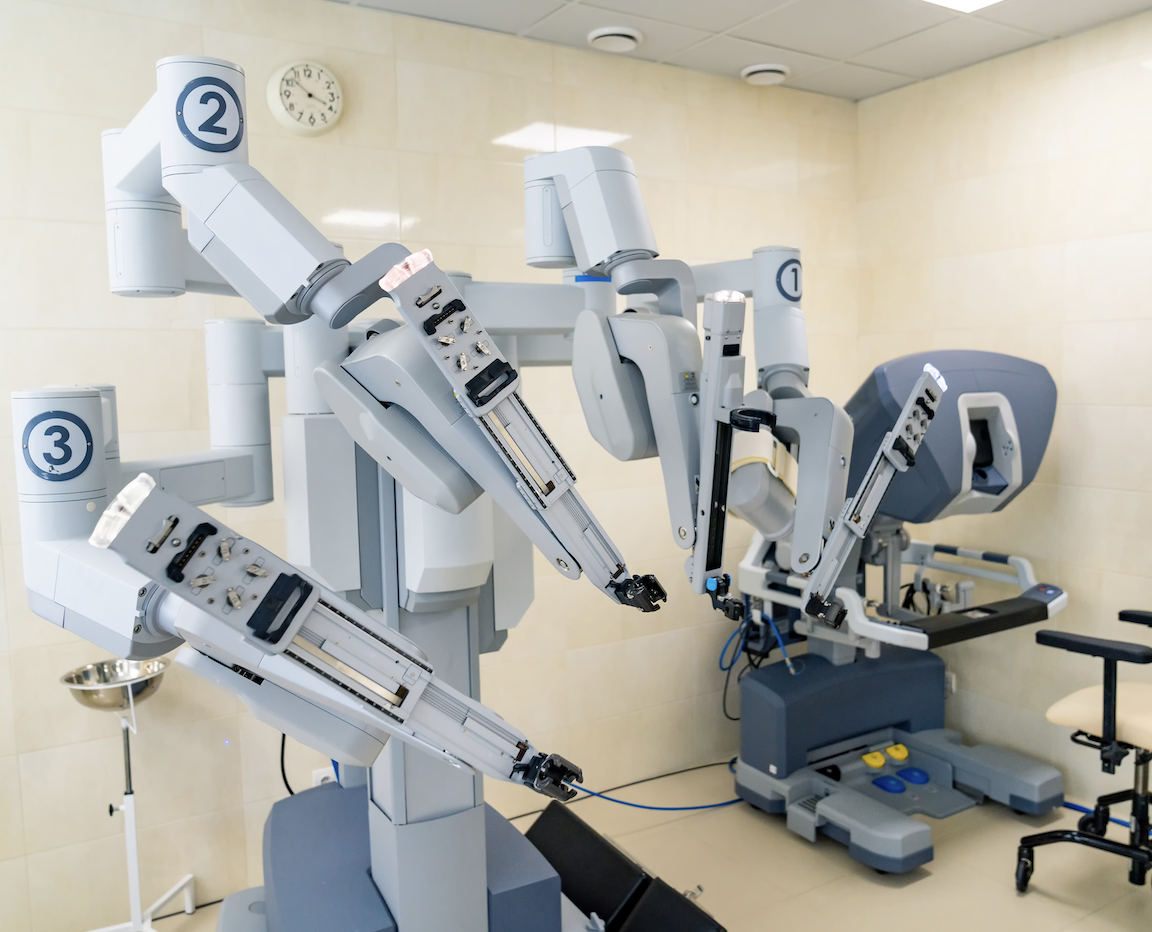
Have you ever considered the idea that a robot could conduct a surgery, or even just assist? Although this may seem like a far-off medical innovation, robotic-assisted surgery has actually been around for quite some time. It is known to increase the precision and accuracy of surgeries, thus leading to better outcomes.
Although robotic-assisted surgery has many advantages, some individuals might be hesitant to allow technology to play such a large role in a serious procedure. How can a robot compare to a surgeon alone, who years and years of medical school and extensive training? Well, it’s important to note that this technology is used by surgeons as a tool and is not an entire replacement for an actual physician.
Take a robotic-assisted knee replacement, for example. This works by capturing a photo of the hip, knee, and ankle using a camera. From there, the robotic arms place the surgical instruments in the correct position. This allows for more precise cuts where the knee replacement will actually be placed. In doing so, the knee goes exactly where we want it, when we want it.
Robotic-assisted spin surgery works in a similar fashion. Like knee surgery, these robots work in spine surgery to increase procedural accuracy. With robots, the unsteadiness of a surgeon’s hands is no longer an issue, and instead it utilizes programmed positions that are both precise and exact. This makes it easier to maneuver small spaces and improves the placement of things like rods and screws.
So, what are the downsides then, of robotic-assisted surgery? Well, as with any technology, sometimes innovation comes at an expense. Robotic surgery can have longer operating times, and it may require more pre-operative imaging like MRIs and CT scans. These things can add up financially, ultimately making the procedures a bit more expensive.
It’s important to note that while robotic-assisted surgery has many benefits, it is not the only option. Most surgeons are equipped to be able to do surgeries both themselves and with robot-assisted technology. Many surgeons can perform surgeries at the same level of accuracy and precision as robots.
Deciding what type of knee or spine surgery is right for you will depend on a multitude of factors, including your personal preferences, medical history, and finances. An in-depth consultation by an experienced physician will be paramount in selecting the right procedure for you. At Orthopedic Centers of Colorado, we have an array of seasoned physicians that can help you in your journey, specifically in hip, foot, knee and spine surgery.
Dr. Ryan Caufield, for example, has extensive clinical expertise in primary and revision hip and knee replacement. Having completed an orthopedic surgery residency in 2010 and a fellowship in adult reconstruction at Rush University Medical Center, he brings years of experience to the table.
Dr. Eric Lindberg another great physician coming out of the Orthopedic Centers of Colorado. Dr. Lindberg is an orthopedic surgeon and specializes in evaluation and treatment of foot and ankle disorders.
If you are interested in robotic-assisted surgery or either of our expertise physicians, be sure to make an appointment at Orthopedic Centers of Colorado. Contact us for an appointment today.